




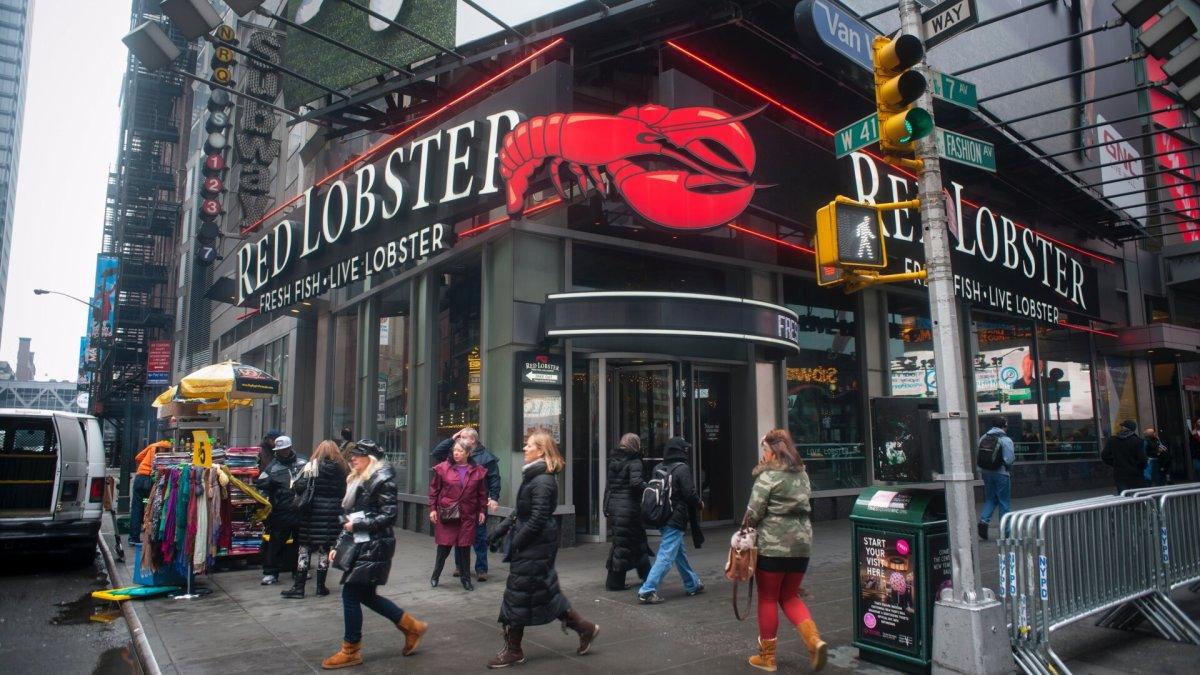

After filing for bankruptcy, closing dozens of locations, and facing mounting losses, a once-iconic seafood chain is now considering further restaurant shutdowns to stabilize its business and return to growth.
For many customers, the chain’s financial troubles signaled the potential end of an era, taking along with it its Cheddar Bay Biscuits and the popular Endless Shrimp promotion. Instead, the company has spent the past two years fighting for a comeback, aiming to rebuild its brand and win back customers by restructuring operations and cutting costs.
For nearly 68 years, Red Lobster has built its reputation on offering affordable, high-quality seafood and has expanded to more than 500 locations worldwide. Yet the very strategy of premium offerings at low prices that fueled its growth eventually became too difficult to sustain.
Red Lobster plans more restaurant closures in 2026
After shuttering around 130 restaurants during its Chapter 11 bankruptcy restructuring, Red Lobster is now reviewing its real estate portfolio and considering additional closures in 2026. The goal is to reduce costs and focus on higher-performing markets.
Many of the chain’s current challenges trace back to 2014, when the private equity firm Golden Gate Capital acquired Red Lobster from Darden Restaurants (DRI) for $2.1 billion. To help finance the deal, the company sold its real estate properties for $1.5 billion in a sale-leaseback transaction.
While the move provided short-term liquidity, it left the chain paying substantial rent, increasing operational costs. By 2023, annual lease obligations had climbed to about $190.5 million, roughly 10% of its revenue, with more than $64 million tied to underperforming locations, according to the bankruptcy filing.
Red Lobster ended 2024 with approximately 528 locations. However, some leases bundle multiple restaurants, making it difficult to close weaker stores without affecting stronger ones.
“Much of the liquidity from the sale-leaseback went toward paying dividends to private equity investors rather than addressing systemic operational issues or adapting the menu and brand to shifting market demands,” wrote University of Pennsylvania Professor of Operations, Information & Decisions Gad Allon on Substack. “This misallocation of resources underscores the risks of prioritizing short-term gains over strategic reinvestment.”
Red Lobster’s new turnaround strategy
Since emerging from bankruptcy, Red Lobster has revamped its menu and marketing to better align with shifting consumer preferences and evolving trends.
Recent menu changes
- Relaunching Happy Hour and seasonal cocktails
- Introducing Create Your Own Ultimate Feast
- Permanently adding Seafood Boils
- Bringing back the fan-favorite hushpuppies
Red Lobster CEO Damola Adamolekun told The Wall Street Journal (WSJ) in an interview that sales are up around 10% from last year, though the chain has not yet returned to pre-bankruptcy levels and many locations still require renovations.
The company has been cutting costs in other areas of its business. In late 2025, Red Lobster laid off around 10% of its corporate workforce and 200 restaurant employees, according to Bloomberg. The WSJ also reported that the chain is renegotiating with its vendors amid rising seafood prices, partly due to tariffs.
Industry analysts warn that aggressive cost-cutting can backfire.
“When restaurants cut labor to manage costs, service suffers. When they reduce food quality to preserve margins, customer satisfaction declines. When they defer maintenance to conserve cash, the dining experience deteriorates,” said analysts at the Value Creation Innovation Institute.
Red Lobster Chapter 11 bankruptcy
Red Lobster filed for Chapter 11 bankruptcy protection in May 2024, having accumulated nearly $300 million in debt. The company cited rising costs, declining consumer traffic, and significant financial losses from its $20 all-you-can-eat shrimp promotion, which alone contributed to an $11 million quarterly loss.
More Restaurant Closures:
- Burger chain closes historic location after 35 years
- 30-year-old pasta chain announces 35 restaurant closures in 2026
- 53-year-old restaurant chain is quietly closing locations nationwide
The chain exited bankruptcy four months later under new ownership by RL Investor Holdings LLC, after receiving court approval for its restructuring plan.
As part of its turnaround, Red Lobster appointed then-36-year-old Damola Adamolekun as CEO in August 2024, following a string of short-lived CEOs, each of whom served for less than a year.
Restaurant chains face industry-wide pressures
Red Lobster is not alone in its struggles. Several well-known chains have filed for Chapter 11 bankruptcy from 2024 through 2026.
Recent Chapter 11 restaurant bankruptcies
- FAT Brands: Parent company for 18 brands, including Fatburger, Johnny Rockets, Round Table Pizza, Twin Peaks, Fazoli’s, and Round Table Pizza filed January 2026 (Source: FAT Brands)
- Bravo Brio Restaurants: Parent company of Bravo Italian Kitchen and Brio Italian Grille filed a second time in August 2025 (Source: Restaurant Dive)
- Hooters: Filed March 2025 (Source: Kroll)
- On The Border Mexican Grill & Cantina: Filed March 2025 (Source: Nation’s Restaurant News)
- TGI Fridays: Filed November 2024 (Source: TGI Fridays)
- Buca di Beppo: Filed August 2024 (Source: RetailWire)
- Rubio’s Coastal Grill: Filed a second time in June 2024 (Source: Restaurant Dive)
- Tijuana Flats: Filed April 2024 (Source: Restaurant Business)
Many of these chains share similar challenges, including large footprints, heavy lease obligations, declining foot traffic, and high food and labor costs.
Prices for food away from home climbed 4% in the 12 months ending January 2026, according to recent U.S. Bureau of Labor Statistics data.
Over the past five years, food and labor costs for the average restaurant have each increased by about 35%, according to the National Restaurant Association.
Related: McDonald’s unveils 2026 menu as sales rebound
To offset those surges, menu prices rose an average of 31% between February 2020 and April 2025, according to U.S. Bureau of Labor Statistics data.
As prices rise, customer traffic declined 1% across the foodservice industry during the quarter ending June 2025, according to Circana.
“This poses a significant challenge for restaurants, as home-cooked meals directly substitute demand for dining establishments, translating to reduced revenues and declines in customer traffic,” said Coresight Research analyst Sujeet Naik.
Due in large part to softer sales and traffic levels, the National Restaurant Association’s Restaurant Performance Index (RPI) fell 0.8% in December 2025 compared to the previous month, the lowest reading since March.
“If you combine restaurant margins being under pressure with a tenuous financial situation, all you need is one or two things to go wrong,” said Bank of America Restaurants Senior Analyst Sara Senatore to Time Magazine.