




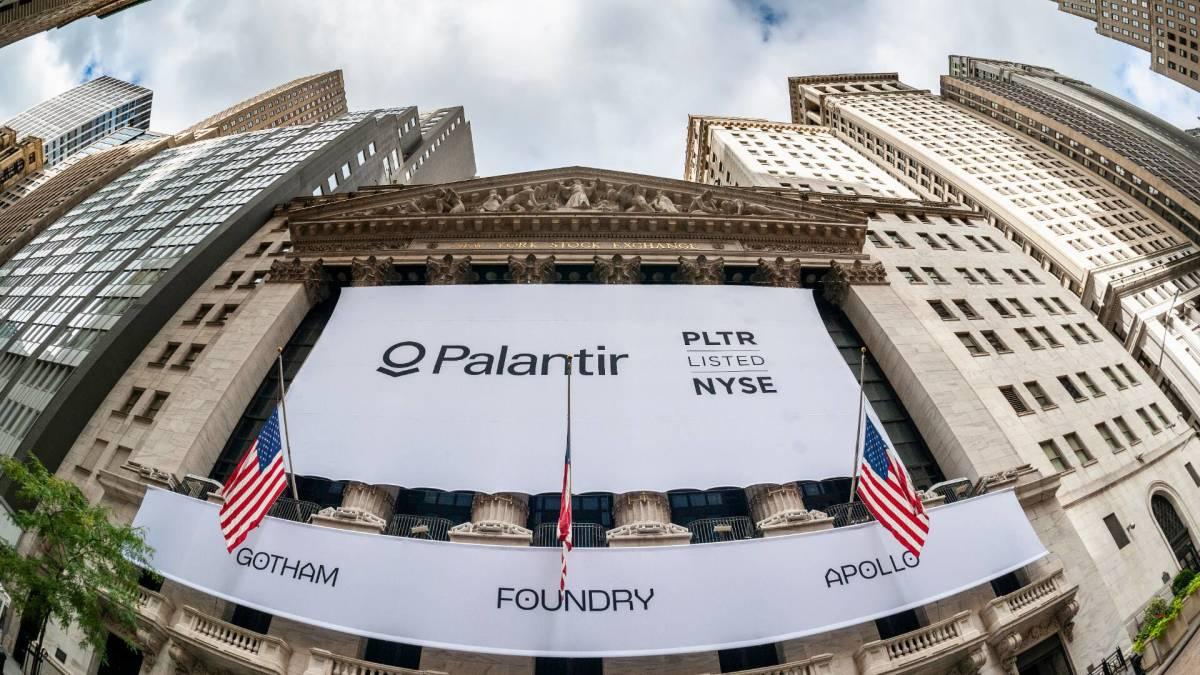

Palantir (PLTR) stock is up today, trading 5% higher near $140, at the time of writing, Wednesday, Feb. 18, according to Yahoo Finance.
The stock lost about 32% since the release of the Q3 earnings report, despite it being strong, and the Q4 report, too, after reaching the peak closing price of $207.18 on November 3.
The sentiment that the stock is overpriced is what has kept it tumbling the past few months. On Feb. 12, Ed Ponsi, managing director of Barchetta Capital Management, wrote on TheStreet Pro that he is “breaking up with Palantir.” After selling the shares, he wrote: “Our average cost is about $39, giving us a profit of 246%.”
However, the situation is not that bleak if we take a look at a longer time frame.
Palantir has gained about 12% over the past year, on par with the SPDR S&P 500 index (SPY), which is also up about 12% in the same period.
This also means Palantir has outperformed four Magnificent 7 members:
- Meta is down 10% in the same period.
- Amazon is down almost 9%.
- Microsoft is down almost 2%.
- Apple is up 8%.
Analysts upgrade Palantir stock to buy
Mizuho Financial Group analysts said the risk-reward profile for Palantir is now attractive following the drop in value.
The firm upgraded Palantir’s stock rating to outperform (buy) from neutral on Feb. 18 and reiterated its $195 price target.
The upgrade is based on the company’s revenue growth, acceleration, and margin expansion at scale, which is unique within the software sector, according to Investing.com.
More Tech Stocks:
- Morgan Stanley sets jaw-dropping Micron price target after event
- Nvidia’s China chip problem isn’t what most investors think
- Quantum Computing makes $110 million move nobody saw coming
Following Palantir’s Q4 2025 results, Freedom Capital Markets upgraded Palantir’s stock rating to buy from sell on Feb. 13 and reiterated a price target of $170.
The firm said Palantir beat consensus estimates and that the Q1 outlook is well above consensus, signaling confidence in durable demand for AI infrastructure. It added that the recent sell-off is “unjustified,” given continued hypergrowth and the underlying strength of the AIP platform, as reported by TipRanks.
What Bank of America thinks about Palantir
The latest research note from Bank of America on Palantir, by analyst Mariana Perez Mora and her team, is from Dec. 16, 2025, and I covered this note in detail in my article “Bank of America updates Palantir stock forecast after private meeting.”
Mora rates Palantir with a buy rating and the target price of $255, based on a 15 enterprise multiple estimate for 2035. She used a longer-term valuation methodology to reflect the sustained high-growth and profitability profile of the company.
Bank of America noted downside risk factors for Palantir:
- Lower-than-expected AI-platforms market growth
- Faster-than-expected commoditization
- Competitors catching up with technologies
- Stronger-than-expected resistance from government customers to use commercial
off-the-shelf solutions
Upside risk factors for Palantir are:
- Stronger-than-expected growth of the AI-platforms market
- Higher-than-expected Palantir penetration
- Better-than-expected profitability
- Better-than-expected successful agreements and investments
Palantir’s recent activity
Rackspace Technology (RXT), a hybrid multicloud and AI solutions company, and Palantir entered into a strategic partnership to help enterprises rapidly deploy and operate Palantir’s Foundry and Artificial Intelligence Platform (AIP) in production.
According to the press release, Rackspace’s governed operating model will provide consistent security, operational controls, and compliance from edge to core to cloud, enabling customers to deploy AI use cases with Palantir in production in weeks or months, rather than months or years.
Related: Morgan Stanley flags $45B hidden cybersecurity opportunity
“Organizations need AI that works in production, not just in demos,” said Gajen Kandiah, CEO of Rackspace Technology.
“Palantir’s platform, combined with Rackspace’s governed cloud operations and our shared forward-deployed engineering approach, enables customers to accelerate time to value and drive competitive business impact with governance and security. This is especially important in regulated industries.”
Palantir shared that the Defense Information Systems Agency has authorized Palantir Federal Cloud Service (PFCS) Forward, extending PFCS’s existing Impact Level 5 and Impact Level 6 Provisional Authorizations to include on-premises and edge deployments.
Palantir’s technology stack can now be deployed across any environment, from enterprise data centers to the tactical edge, on hardware of the customer’s choosing.
According to the company, the model is “authorize once, use many.” PFCS Forward provides a Provisional Authorization package, including an Enterprise Mission Assurance Support Service record, inherited by every end customer.
This should enable customers using PFCS Forward to significantly reduce the time to Authorization to Operate by eliminating the need for site-specific implementation, documentation, and assessment of software security controls.