




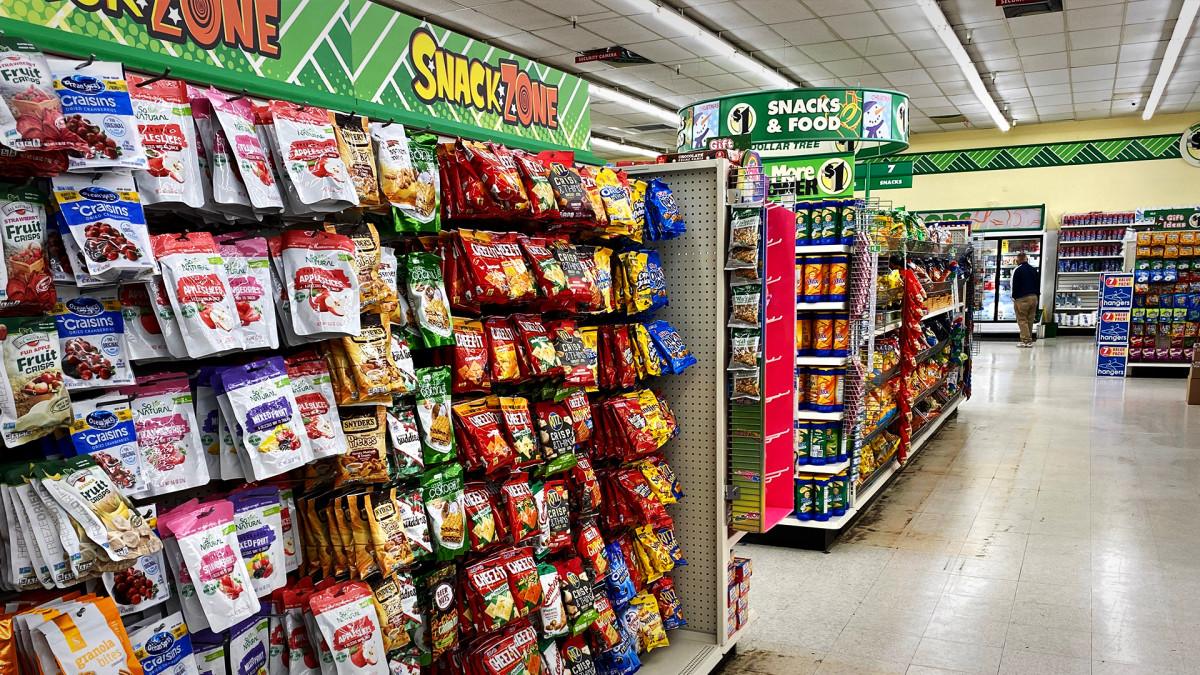

Shopping at Dollar Tree used to be a pretty predictable experience. You’d walk in, look around, and take comfort in the fact that no matter which items landed in your shopping cart, each one would only cost $1.
But that’s not the case anymore.
For one thing, Dollar Tree no longer has a $1 base price. In 2021, Dollar Tree made the decision to raise its base price to $1.25.
The company said at the time that raising the base price to $1.25 would give it “greater flexibility to continue providing incredible value that helps customers get the everyday items they need and celebratory and seasonal products Dollar Tree is best known for.”
More recently, Dollar Tree adopted a $1.5 base price on much of its inventory.
But it’s not just that Dollar Tree’s base price is higher. The store’s pricing is, frankly, all over the place.
The last time I walked into Dollar Tree with my daughter, she found a $5 light-up disco ball she wanted to buy. (I had agreed that she could pick out one item before we walked in, forgetting that it might result in me spending more than expected.)
In time, though, those $5 Dollar Tree items may become the norm, not the exception, due to a shift in how the company is choosing to market itself.
Image source: Shutterstock
Dollar Tree’s multi-price strategy seems to be working
Critics of Dollar Tree’s new multi-price strategy might argue that it’s hurting the company by alienating lower-income shoppers. But that doesn’t seem to be the case.
During Dollar Tree’s most recent earnings call, CEO Michael Creedon said, “Multi-price was a key driver of our Q3 momentum.”
Related: Costco members angry about one strict store policy
Creedon also pointed out that the company’s most recent Halloween generated over $200 million in sales — an all-time record.
In fact, the company was able to generate about 25% more margin dollars from its most recent Halloween than three years prior, all the while selling about 10% fewer products.
In mid-2025, Wells Fargo analysts said Dollar Tree’s multi-price strategy has been “gaining traction and yielding share,” as reported by Retail Dive.
Dollar Tree is opening stores in wealthy neighborhoods
Given recent momentum, Dollar Tree is expanding its store footprint to reach more customers. But it’s taking a different approach this time around.
Rather than target low- or even moderate-income neighborhoods, Dollar Tree is looking to open stores in more affluent neighborhoods.
Half of the Dollar Tree locations opened since 2019 are in high-income ZIP codes, said Bloomberg.
Related: Sam’s Club copies a popular Costco snack item
During Dollar Tree’s last earnings call, the company said 60% of its new customers had household incomes above $100,000.
“Today, we serve an increasingly broad spectrum of shoppers, from core value-focused households to middle- and higher-income shoppers who are making deliberate choices about how and where they spend,” Creedon said.
Given Dollar Tree’s expansion into higher-priced inventory, targeting high-income ZIP codes might seem to make sense. But the company should also recognize that some of its higher-income shoppers may be “closet Dollar Tree customers” more so than vocal fans of the store.
To be clear, there’s no shame in shopping at Dollar Tree. But it may be something wealthy customers prefer to do more anonymously.
More Retail:
- Costco sees major shift in member behavior
- Retail chain shuts all locations as legal changes hit industry
- Costco makes major investment in online shopping for members
- Lululemon struggles to reverse concerning customer behavior
- T-Mobile launches free offer for customers after major loss
As Bloomberg reported, Dollar Tree’s 9,000th store opened last year within a few miles of a Louis Vuitton, a steakhouse that sells $525 Wagyu beef, and Porsche and Ferrari dealerships.
It’s one thing for Dollar Tree to expand its product assortment. It’s another thing for the company to wedge itself into neighborhoods where it’s likely to stick out like a sore thumb.