

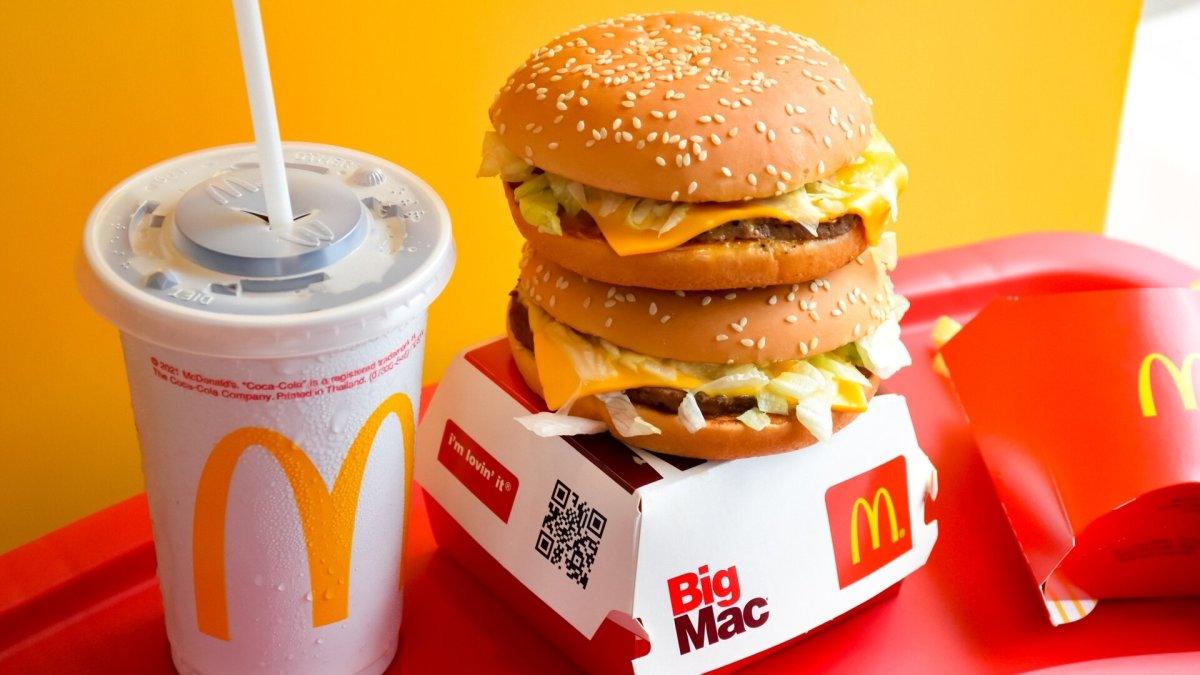

While the Big Mac has been McDonald’s premium sandwich for over 50 years, it wasn’t on the menu when the chain opened its first restaurant in 1940.
Back then, the idea of a premium burger conflicted with the broader concept of having a simple menu that could be delivered quickly. Back in those early days, the chain focused on a simple offering of burgers, cheeseburgers, fries, and sodas.
It was actually 27 years later when the chain’s corporate leaders gave Michael James “Jim” Delligatti, a franchise operator, permission to launch a burger with two patties.
“The Big Mac made its debut on April 22 in 1967. According to the New York Times, the first newspaper ads for the specialty sandwich described it as a burger with ‘two freshly ground patties, tangy melted cheese, crisp lettuce, pickle, and our own Special Sauce.’ Early printed ads also often included the catch phrase ‘A meal disguised as a sandwich,’ to emphasize the burger’s size,” Food & Wine reported.
The Big Mac was a hit that went on to become the chain’s signature offering on an enduring basis. Since 1967, however, McDonald’s has tried many times to create new signature, premium burgers, and aside from the Quarter Pounder with Cheese, the chain has failed many times.
McDonald’s goes premium again
Despite failures like the Arch Deluxe, and Angus Third Pounders, McDonald’s has decided to launch a new premium burger, the Big Arch.
CFO Ian Borden has talked about why the company has struggled with higher-end offerings in the past.
“We thought the opportunity was about premium burgers, which was wrong,” he said at a UBS Global Consumer and Retail Conference in 2024, Business Insider reported. “We weren’t successful.”
Instead, he noted, customers want a larger, more satisfying burger. The Big Arch, which launches March 3, will attempt to meet that demand.
McDonald’s will launch the Bir Arch at a time when consumers are seeking value and when rivals, including Chipotle, have leaned into the added protein trend.
Protein is hot. Everybody is into protein,” McDonald’s CEO Chris Kempczinski said in an Instagram video.
In addition to Chipotle’s protein menu, Starbucks has added protein-infused coffees, and many chains are promoting protein on their menus.
More Restaurants
- Chipotle’s new consumer strategy raises eyebrows
- Burger King revives iconic kids’ meal toys after 22 years
- Walmart surprises shoppers with bold new restaurant offering
This year, 28.4% of U.S. restaurant menus call out “protein,” up from 5.9% a decade ago, according to Datassential, CNBC reported.
“A lot of younger consumers are more proactive about their health habits, so they’re looking for ways to support health now but also to support their health in the future,” said Julia Mills, a food and drink analyst for market research firm Mintel told the news site. “Generation Alpha, Gen Z, millennials — these consumers are very active on social media, so they’re constantly being fed this message that you need more protein, and protein helps you gain muscle and makes you stronger.”
Shutterstock
Big Arch ingredients
- Two beef patties: About a quarter-pound each, seasoned after cooking
- Poppy and sesame seed bun: Soft, larger-than-typical burger buns, with both poppy and sesame seeds
- White cheddar cheese: Two slices of creamy cheddar
- Big Arch sauce: Signature sauce including tomato concentrate/paste, egg yolk, mustard, and spices (a tangier twist on Big Mac-style sauce)
- Lettuce: Shredded iceberg for crunch
- Crispy onions: Fried onion pieces for extra texture
- Slivered onions: Fresh white onions
- Pickle slices: Gherkin pickles
- Calories: 1,050-1,110 kcal, roughly double the calories of a McDonald’s classic Big Mac (550–560 kcal)
Source: McDonald’s
McDonald’s seeks A balance of price and value
McDonald’s is trying to find a balance between value and premium products in a challenged consumer spending environment in the U.S. and around the world,” said Raymond James analyst Bryan Elliott, Forbes reported.
Balancing value and price is a challenge.
“The real nirvana for this company is if they can sell premium products but also drive traffic and value. Those two things run incongruously — when you promote value, it’s hard to drive a premium product,” Jefferies analyst Andy Barish said.
Failed McDonald’s premium burger attempts
While he admitted failing at premium burgers, Borden said he sees a different opportunity.
There’s a “significant” opportunity for “a large, more satiating-type burger” across McDonald’s large markets, Borden said.
Across multiple attempts, McDonald’s premium burgers stumbled for the same reason: operational complexity outweighed consumer willingness to pay more at a value-first chain.
- Arch Deluxe (1996)
Marketed as a burger for adults with more sophisticated tastesHigher price and slower prep conflicted with McDonald’s speed and value model
Widely considered one of the company’s biggest product failures
Source: Eater
- Angus Third Pounders (2009 to 2013)
Featured higher-quality beef and premium pricingRequired longer cook times that slowed kitchens and drive thru service
Dropped after sales failed to justify operational complexity
Source: Business Insider
- Signature Crafted Recipes (2016 to 2020)
Customizable burgers with premium buns and toppingsIncreased wait times and labor demands frustrated franchisees
Phased out as McDonald’s refocused on speed and simplicity
Source: CNBC
- Regional and international premium burger tests
Often tested with upgraded ingredients and higher pricesMany failed to scale due to margin pressure and execution challenges
Frequently discontinued quietly after limited runs
Source: Business Insider
Related: Costco adds limited-time food court treat to rival McDonald’s