





Habits are powerful. As such, they can make or break our lives. If we make a habit of eating healthy and working out, that’s great, but if our habits are undesirable, that’s not good. Habits also play an important role in retail, and business operators know this very well.
That’s why big retailers don’t make a decision for major change in their stores lightly. Changes are necessary as consumer habits also shift, but when consumer habits are constant making a change can upset customers.
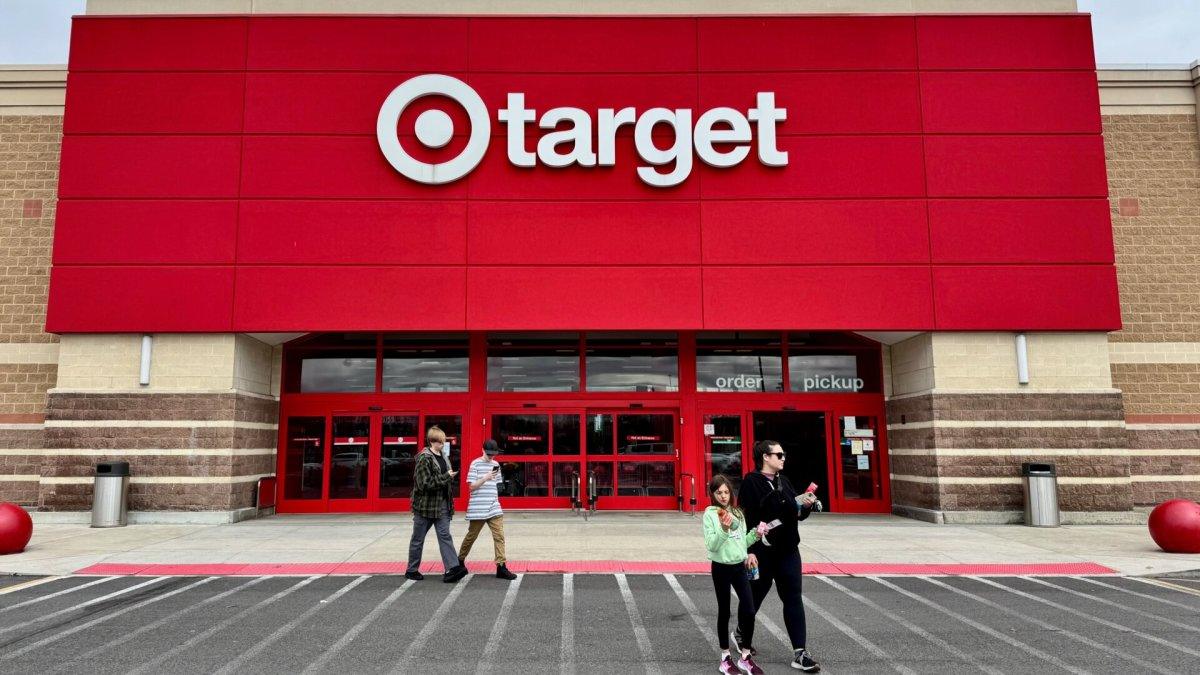
Target Corporation (TGT) is currently going through a transformation, after various challenges it had for years, including weak sales amid controversies that sparked huge customer boycotts, reported TheStreet’s Patricia Battle.
The retail chain recently hired a new CEO in an effort to repair its reputation and is also deploying workforce changes to improve the customer experience.
In 2025, Target made several moves to attract more shoppers, including several discounts and special offers. However, its latest earnings results revealed a comparable sales decrease of 2.5% year over year in the fourth quarter.
Moreover, Target’s full- year 2025 net sales dropped 1.7% to $104.8 billion, reflecting a 2.6% decrease in comparable sales, according to its 8-K filing with Securities and Exchange Commission (SEC).
Now, Target is incorporating more changes to its business.
Target to remove cereal with artificial colors by the end of May
Target recently confirmed that by the end of May it will become one of the first national retailers that only carries cereals made without certified synthetic colors.
The move follows up on the Trump administration’s efforts to remove synthetic colors from foods. In May 2025, the US Food and Drug Administration (FDA) approved three food colors from natural sources.
In February 2026, the FDA allowed for more flexibility, enabling companies to claim that products do not contain artificial colors as long as they are not made with petroleum-based dyes.
Removing from its shelves cereals that still contain artificial dyes is part of Target’s strategy to “lead with merchandising authority” and drive further growth, according to its press release.
“We know consumers are increasingly prioritizing healthier lifestyles, and we’re moving quickly to evolve our offerings to meet their needs,” stated Cara Sylvester, executive vice president and chief merchandising officer, Target.
Which cereals will be removed from Target’s shelves?
Target’s flagship private-label brand, Good & Gather, already excludes synthetic colors across its entire 2,500+ product lineup (including dairy, meat, and produce). The company is trying to use this brand’s success as the “gold standard” for the rest of its grocery aisles.
Currently, cereals made without synthetic dyes already account for 85% of Target’s cereal sales, the company said as reported by BBC. The company declined to comment if cereal brands plan to adjust their formula to accommodate Target’s new policy.
Target has not disclosed a list of cereals that will be removed from its shelves, however several brands might fall into that category as their cereals contain certified synthetic colors. Meanwhile, the majority of popular cereal and other food brands have pledged to remove artificial colors from their formula over time.
For example, WK Kellogg, the company behind fan favorite Froot Loops and Rice Krispies has previously announced a plan to reformulate its cereals served in school to not include FD&C colors by the 2026-2027 school year.
Moreover, the company confirmed it plans to remove these colorings from its food in retail by the end of 2027, according to the press release.
While WK Kellogg did not immediately respond to a BBC inquiry, it is possible that Target’s deadline will be too short for the company to make adjustments and remain on Target’s shelves.
WK Kellogg’s products sold at Target that contain artificial dyes include:
- Froot Loops
- Apple Jacks
- Squishmallows
Source: The Associated Press
Another major brand behind cereals such as Cheerios and Lucky Charms, General Mills (GIS) in June 2025 also announced plans to remove certified synthetic colors from all its U.S. cereals and all K-12 school foods by summer 2026.
On March 5, 2026, General Mills disclosed that its entire portfolio of K-12 school foods is now made without certified colors, successfully achieving this milestone ahead of its summer 2026 commitment.
However, the company also confirmed that it is on track to remove certified colors from its U.S. cereal portfolio by summer 2026 and from its full U.S. retail portfolio by the end of 2027, meaning certain cereals might not meet Target’s deadline to remain on shelves.
On the other hand, General Mills recently told the Associated Press that 85% of its U.S. retail portfolio — including brands like Cheerios and Cascadian Farm — is already free of artificial colors and that the company doesn’t anticipate that Target will halt sales of any of its products.
Related: Iconic national office retailer closing stores, no bankruptcy
Potential dangers of artificial colors commonly found in foods
In April 2025, Health Secretary Robert F Kennedy Jr announced a ban on eight commonly used artificial food dyes to help Americans “know what’s in their food,” reported BBC.
Kennedy and his Make America Healthy Again movement also urged food and beverage makers to remove ingredients such as corn syrup, seed oils and artificial dyes from their products arguing they are related to various health problems.
Following these efforts many food and beverage giants agreed to change their formulation to answer the new suggestions. For example, Coca-Cola announced in July 2025 it will use real cane sugar in its drinks sold across the United States, reported the Associated Press.
Additionally, Target’s rival Walmart also pledged to eliminate synthetic dyes across all private brand food products.
Why the sudden war on artificial colors found in food?
In April 2025, when the FDA announced that the Agency and HHS plan to phase out petroleum-based synthetic dyes in the nation’s food supply, Kennedy Jr. called these substances “toxic.”
Some public-health advocates argue artificial dyes serve little purpose beyond marketing. “The most important thing to know about food dyes is that their only purpose is to make food companies money,” stated Peter G. Lurie, president of the Center for Science in the Public Interest.
Artificial dyes currently used in food:
- Red No. 3 (Erythrosine): A cherry-red coloring commonly used in candy, popsicles and cake-decorating gels.
- Red No. 40 (Allura Red): A dark red dye that is used in sports drinks, candy, condiments and cereals.
- Yellow No. 5 (Tartrazine): A lemon-yellow dye that is found in candy, soft drinks, chips, popcorn and cereals.
- Yellow No. 6 (Sunset Yellow): An orange-yellow dye that is used in candy, sauces, baked goods and preserved fruits.
- Blue No. 1 (Brilliant Blue): A greenish-blue dye used in ice cream, canned peas, packaged soups, popsicles and icings.
- Blue No. 2 (Indigo Carmine): A royal blue dye found in candy, ice cream, cereal and snacks.
Source: Healthline
Some studies suggest the connection between some artificial colors and certain health problems, from hyperactivity and attention problems in children to higher risk of certain cancers.
More Retail:
- Dollar General makes key move Target, Walmart can’t beat
- Discount retail chain suddenly closes multiple locations
- Lowe’s makes major change to how you interact with its stores
Food dyes have been associated with:
- Hyperactivity, according to OEHHA.
- Increase in attention deficit hyperactivity disorder (ADHD) symptoms in children, according to a 2022 review of studies published in the National Library of Medicine.
- Changes to attention and activity in children, according to 2022 Study in Springer Nature.
- Red 40 is a synthetic compound found in many ultra‑processed foods and that its use increased alongside rises in early‑onset colorectal cancer rates.
- Some researchers have noted that the increased use of Red 40 in ultra‑processed foods has occurred alongside the rising incidence of early‑onset colorectal cancer, according to 2024 study published in Oxford Academic.
- Red 3 and Red 105 promoted the development of thyroid tumors in rats, raising concerns about their potential harm to humans, according to Japanese Journal of Cancer Research.
- Researchers linked Blue 2 to brain and mammary tumors in rats, raising significant human safety concerns, according to 2021 study published in the National Library of Medicine.
Still, the FDA’s website continues to report limited evidence for harms from artificial colors. “The totality of scientific evidence shows that most children have no adverse effects when consuming foods containing color additives, but some evidence suggests that certain children may be sensitive to them,” the site reads.
Consumers react to Target’s decision to remove cereals with artificial colors
While Target’s move “is part of its broader ambition to build a grocery experience rooted in differentiation and international curation for today’s families,” a number of customers expressed skepticism and cynicism about the move.
In a Reddit thread covering the news, some users shared suspicion of political motives behind the decision, others viewed the move as a distraction and empty gesture that prioritizes cultural trends over substantial public health reform.
“They’re trying to replace the people who left with MAHA types, who are in a similar higher-income type of demographic,” wrote user ghu79421.
User Due_Satisfaction2167 who is apparently among the people still boycotting the company, focused on arguing that this new move is not going to change much. “Going more MAGA/MAHA isn’t going to convince me to abandon this boycott, Target,” they wrote.
On the other hand, industry experts, such as Vani Hari who is the leader of Maha, American author, activist and blogger behind Food Babe, praised the Target’s decision praising the importance of the company’s move.
“When a major retailer like Target makes that kind of stance, it has impacts across the food industry, and it sends a signal that retailers are siding with consumers who want less artificial ingredients,” Hari said according to The Guardian
According to a 2024 analysis by Nielsen, 48% of U.S. consumersactively avoid products containing artificial colors, while 37%are willing to pay more for products made with natural ingredients.
Related: Lowe’s upgrades offer for loyal customers amid sluggish sales