




Verizon has been struggling to retain loyal customers following recent price hikes and increasing competition in the wireless industry. Amid those pressures, the company has made a major policy change that makes it harder for customers to cut ties and move to another carrier.
Last month, Verizon received approval from the Federal Communications Commission to waive a rule requiring it to automatically unlock a phone it sells to a customer after 60 days, despite backlash from consumers and advocacy groups who labeled Verizon’s request as “anti-consumer behavior.”
Verizon was first required to comply with the rule in 2008, after it acquired licenses to use 700 MHz spectrum. The requirement was reaffirmed when Verizon purchased TracFone in 2021. Verizon argued that the phone unlocking rule has contributed to “device fraud” and made phones less affordable for low-income consumers.
The FCC confirmed that Verizon saw a spike in fraud after the rule took effect, and its stolen handsets have even been resold on the dark web at premium prices in multiple countries.
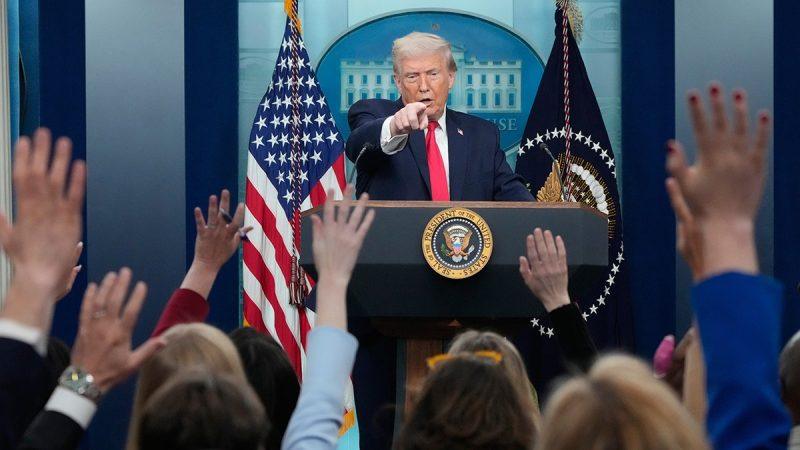
“By waiving a regulation that incentivized bad actors to target one particular carrier’s handsets for theft, we now have a uniform industry standard that can help stem the flow of handsets into the black market,” said FCC Chair Brendan Carr in a press release.
Verizon adds new restrictions to its device unlock policy
Shortly after receiving approval to have the rule waived, Verizon updated its device unlock policy for its prepaid brands on Jan. 20. Devices purchased from Total Wireless, Visible, StraightTalk and Tracfone are now only unlocked upon request after 365 days of paid and active service and if several conditions are met.
More recently, Verizon also tweaked its device unlock policy for postpaid phone customers, a change the company claims it implemented on Jan. 27, according to a recent report from Ars Technica.
Postpaid phones purchased from Verizon will be automatically unlocked once paid in full, meaning customers won’t be able to switch to another carrier if they have a remaining balance.
However, if a customer pays off the device online or in the My Verizon App, the unlocking process will be delayed by 35 days.
This delay also applies if a customer uses a nonsecure payment method such as a Verizon gift card, paper check or magnetic stripe swipe to purchase or pay off the device. For business customers, bill credits are also considered nonsecure payment methods. Verizon claims that this move will help prevent fraud.
Related: Verizon’s major network outage sparks new fallout after backlash
Previously, the 35-day waiting period applied only to customers who used a Verizon gift card as a payment method.
To dodge this waiting period, customers must pay off the balance of the device with a secure payment such as a credit card with an EMV chip, cash or contactless payment, but it has to be at a Verizon store.
It is also important to note that customers should not encounter a waiting period to have their phone unlocked if they pay it off via automatic monthly payments on a device plan.
Even though Verizon claims it updated its policy on Jan. 27, the change wasn’t live on its website until Feb. 11, according to Ars Technica. This means Verizon will apply the new rules to transactions that occurred before the policy change was posted on its website.
The report also states that the 35-day waiting period applies regardless of when the device was purchased.
Verizon struggles to keep loyal customers
The move from Verizon comes after it saw an influx of new wireless customers. During the fourth quarter of 2025, Verizon welcomed 616,000 new postpaid phone customers, according to its latest earnings report.
Despite this success, the company saw its postpaid phone churn, the amount of postpaid phone customers who canceled their service, reach 0.95%, which is higher than the 0.88% churn it reported for the same quarter in 2024. The company’s operating income also declined by 32.6% year over year.
During an earnings call last month, Verizon CEO Dan Schulman mainly attributed the elevated churn to “prior pricing actions as well as competition” and said there are four reasons why customers are leaving the company.
More Telecom News:
- T-Mobile drops 2 new phone plans to stop customers from fleeing
- Verizon CEO shifts gears after 2.25 million customers depart
- AT&T closes billion-dollar acquisition to win back customers
“It’s price increases without corresponding value,” said Schulman. “That just irritates some customers, and we’ve seen the churn rise as a result of that, and we’ve stopped doing that, and we’re going to start adding value to it.”
“Second is friction in the process, whether it’s onboarding, the billing,” he continued. “When they call our customer service, that needs to be flawless, and we need to reduce complexity, and we need to address that. We already have initiatives underway to address each and every one of those things. And then there’s price perception and competitive intensity.”
While many consumers have been switching to other traditional carriers, such as T-Mobile and AT&T, for lower-priced phone plans, they have also been joining smaller wireless carriers, such as mobile virtual network operators (MVNOs).
Cable companies such as Comcast and Spectrum have also been gaining new phone customers through their bundled phone, TV and internet offers.
Jeff Kagan, an industry analyst, said that the telecom industry is rapidly changing due to a “renewed focus and energy” at these companies.
“New competitors, new technologies, and new marketing approaches will continue to reshape this industry,” said Kagan. “The question is what leadership in this sector will look like five or ten years from now.”
As more consumers explore nontraditional phone service options, a Market Force Information survey last year found that Verizon is failing to surpass smaller wireless carriers in consumer satisfaction.
How U.S. consumers rate Verizon:
- About 65% of U.S. consumers are enrolled in phone plans from Verizon, T-Mobile, or AT&T, and pay, on average, over $100 per month for service.
- Verizon customers spend an average of $157 per month on phone service, the highest among its top competitors.
- Verizon has a 40% overall brand performance score across key customer experience metrics.
- Smaller wireless carriers outperformed larger ones, with Consumer Cellular at 73% rating and Mint Mobile scoring 65.8%.
- In consumer loyalty rankings, Verizon fell below the 25th percentile, ranking near the lower tier of providers. By contrast, smaller carriers including Consumer Cellular, Mint Mobile and Google Fi, ranked above the 75th percentile.
Source: Market Force Information
In a press release, David Murray, senior director of client strategy at Market Force Information, said that “superior customer experiences” are what more consumers nationwide are seeking from their wireless providers.
“While cost and coverage are always key factors, today’s consumers are placing more importance on ease of service and overall satisfaction with their provider,” said Murray. “The top performers are setting the bar in both customer experience and loyalty.”
Related: T-Mobile drops 2 new phone plans to stop customers from fleeing